Principle 3: Include all relevant parties
Exclusion can create division. Active participation increase the likelyhood of finding solutions in unity.
Applied Principle 3 by inviting all parties
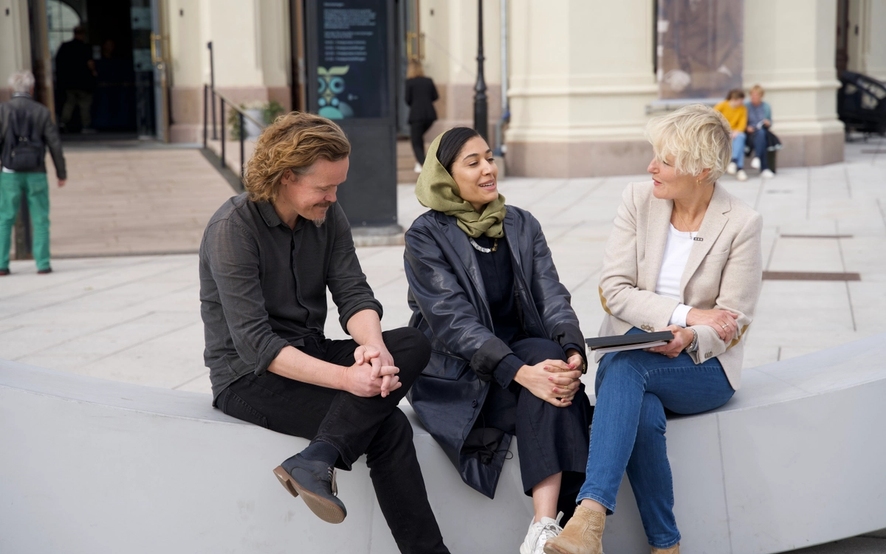
Together We Build It and Utøya wanted to create understanding where they saw conflict. Despite major differences and earlier hesitation to meet, different groups from Libya came together to take part in a dialogue.
An inclusive process:
- Invite all relevant parties.
- Ask the questions: Who needs to talk to whom about what, where and when.
- Ensure a transparent and open process about who should participate in the dialogue.
- Try to include everyone who should talk to eachother. There may be vested interests in not inviting relevant parties to the dialogue.
- Find out if a party wants to set the agenda themselves, and will not give others access to important arenas where topics are raised decisions are made.
- Sometimes someone refuses to join a dialogue. Respect that is their right.
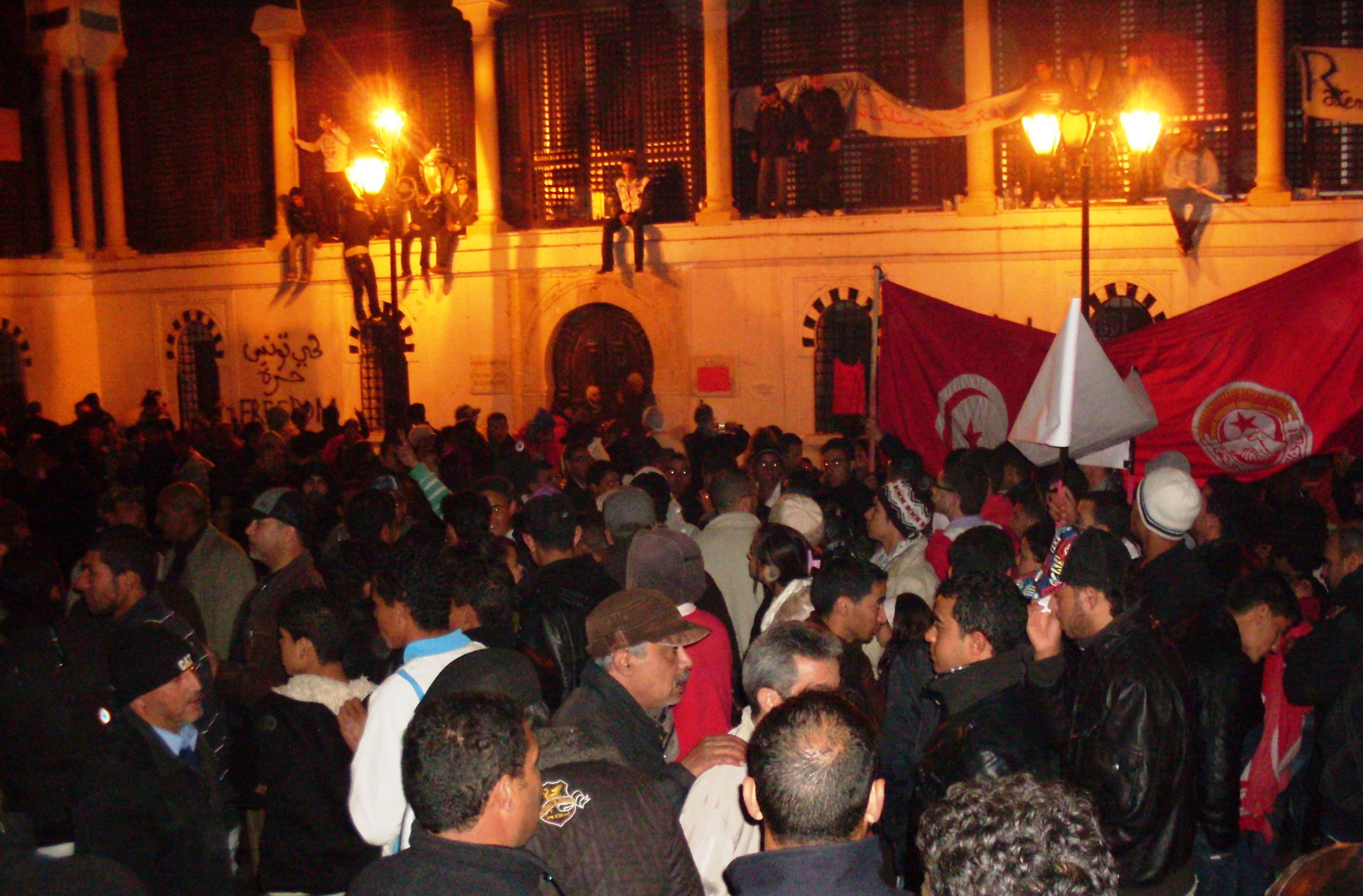
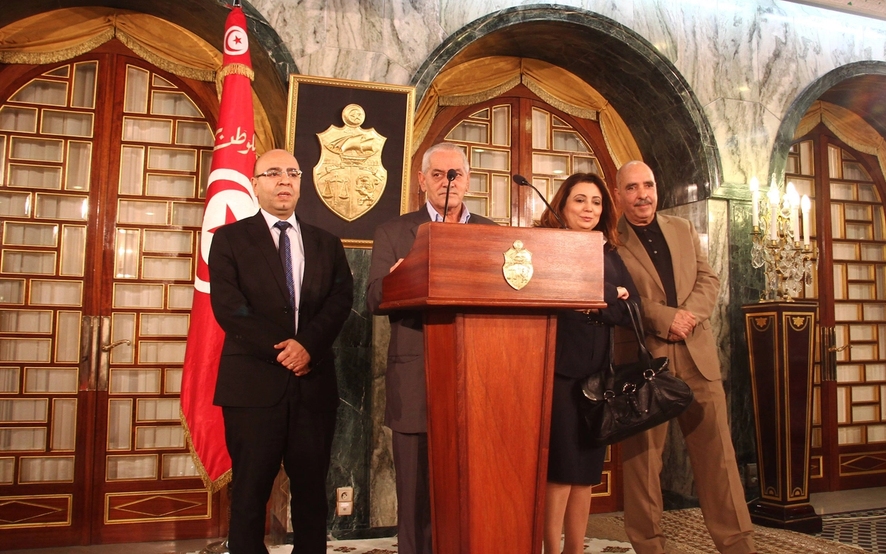
Stopped a civil war by inviting all parties to create a shared constitution
On the brink of civil war in Tunisia, 21 parties managed to agree on how to create a shared constitution. They were invited into a forum where each party had the chance to speak. The fact that the country’s Islamist and secular forces could come together and unite around a constitution shows what becomes possible when multiple parties are invited to the negotiating table.
What are the dialogue principles?
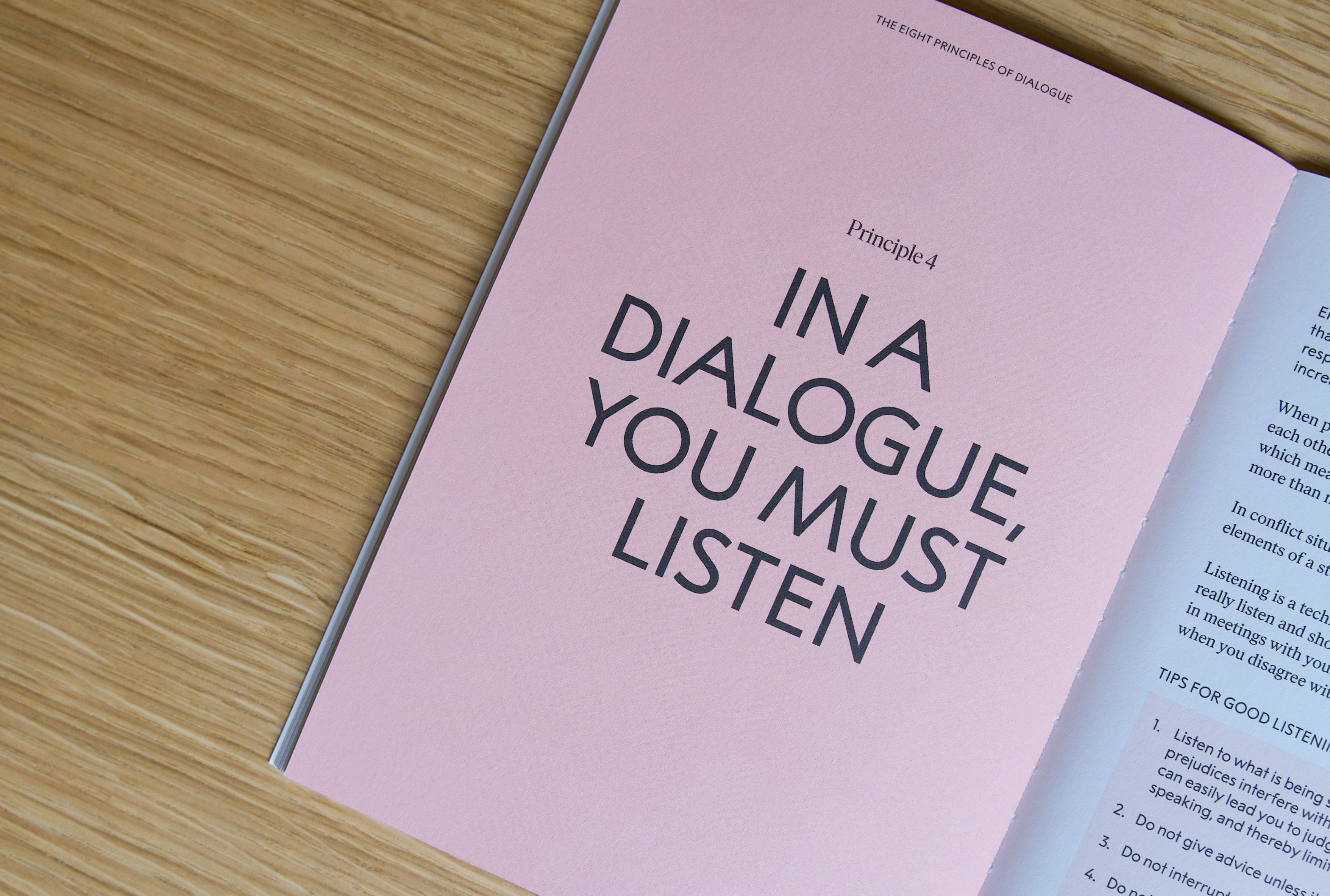
The eight dialogue principles were defined when we tried to understand how the Peace Prize laureates managed to move their causes forward in such a peaceful and productive way. We realised there is a pattern in their approach. Dialogue is the overarching concept, while the principles are parts of dialogue that anyone can practise.