Art that invites new ways of thinking about peace
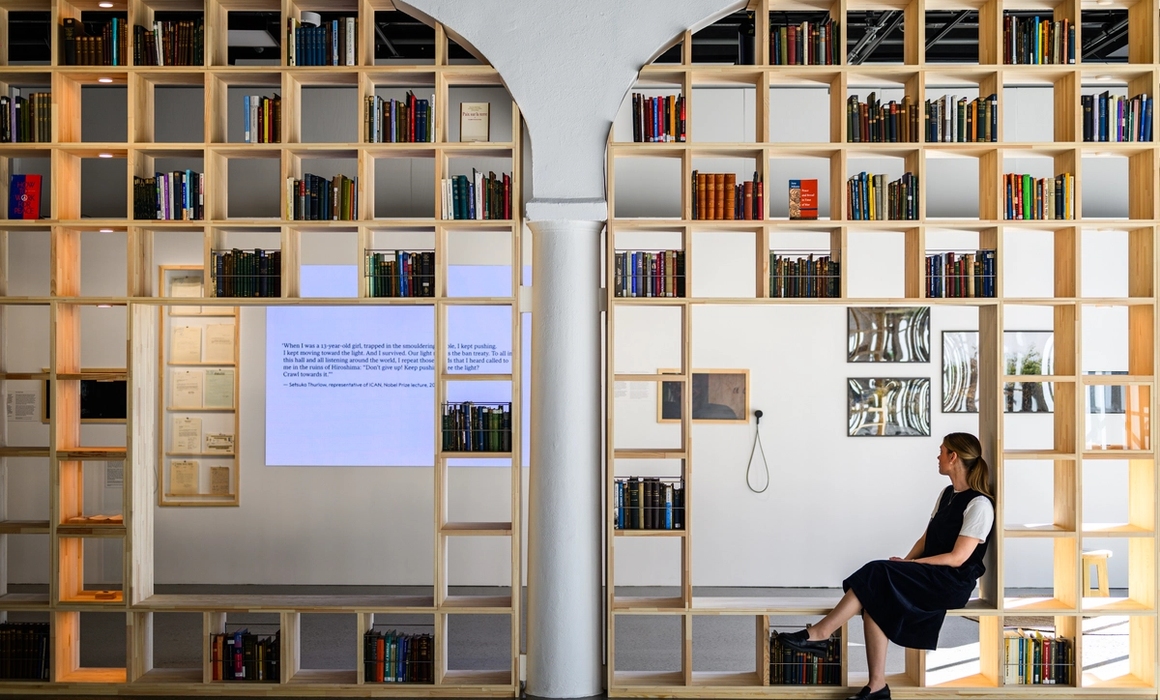
The exhibition Paths to Peace at the Nobel Peace Center tells the story of peace across time by highlighting examples of how people have sought to create and define peace – from antiquity to the present day. Through historical peace treaties, books on peace, quotations, poetry, nomination letters to the Nobel Peace Prize, and research, the exhibition invites reflection on what peace has been, and whether there is anything we can carry from the past into our own time – a time in which peace receives less attention and is increasingly seen as something naive or even utopian.
Within the exhibition, three contemporary artworks invite visitors to explore different aspects of peace: language, nature and memory.
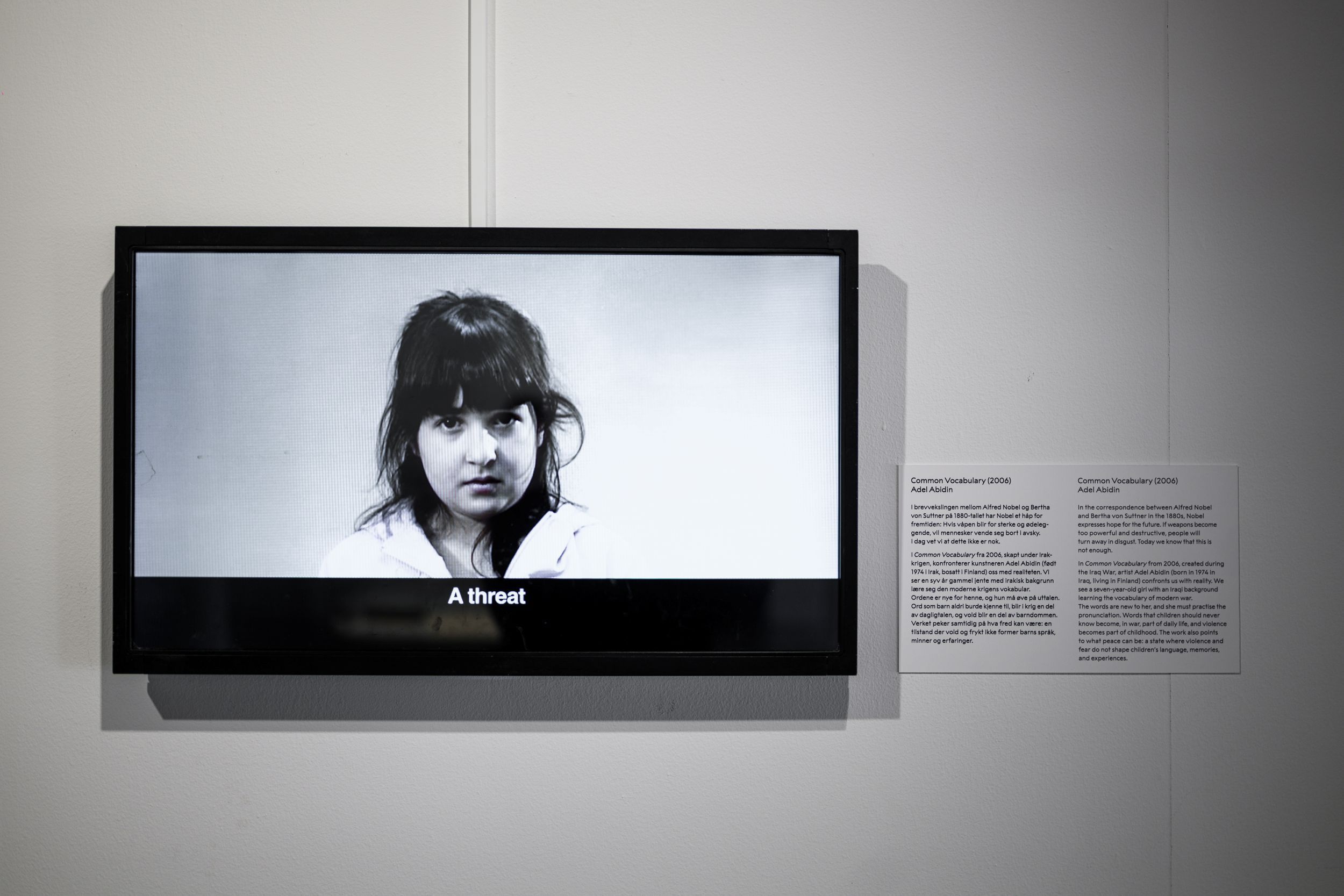
The language of war
Adel Abidin’s Common Vocabulary (2006) shows a seven-year-old girl of Iraqi background learning the vocabulary of modern warfare. The words are new to her, and she must practice their pronunciation. Words no child should ever have to know become part of everyday language in times of war – and violence becomes part of childhood.
The work makes clear what is at stake: what peace might mean as the absence of a reality in which war shapes children’s language, memories and experiences. In connection with the video, visitors can take with them cards featuring the words the girl learns, written in Arabic, Norwegian and English.
“In Common Vocabulary, I explore the impact of war on childhood, focusing on how conflict infiltrates language itself. Children are meant to inherit the vocabulary of play, curiosity, and imagination, yet in war zones they are often forced to absorb the language of violence, fear, and survival. The work reflects on how these words become woven into the innocent tapestry of childhood, revealing that war does not only destroy places, it also reshapes the very language through which children come to understand the world.” — Adel Abidin
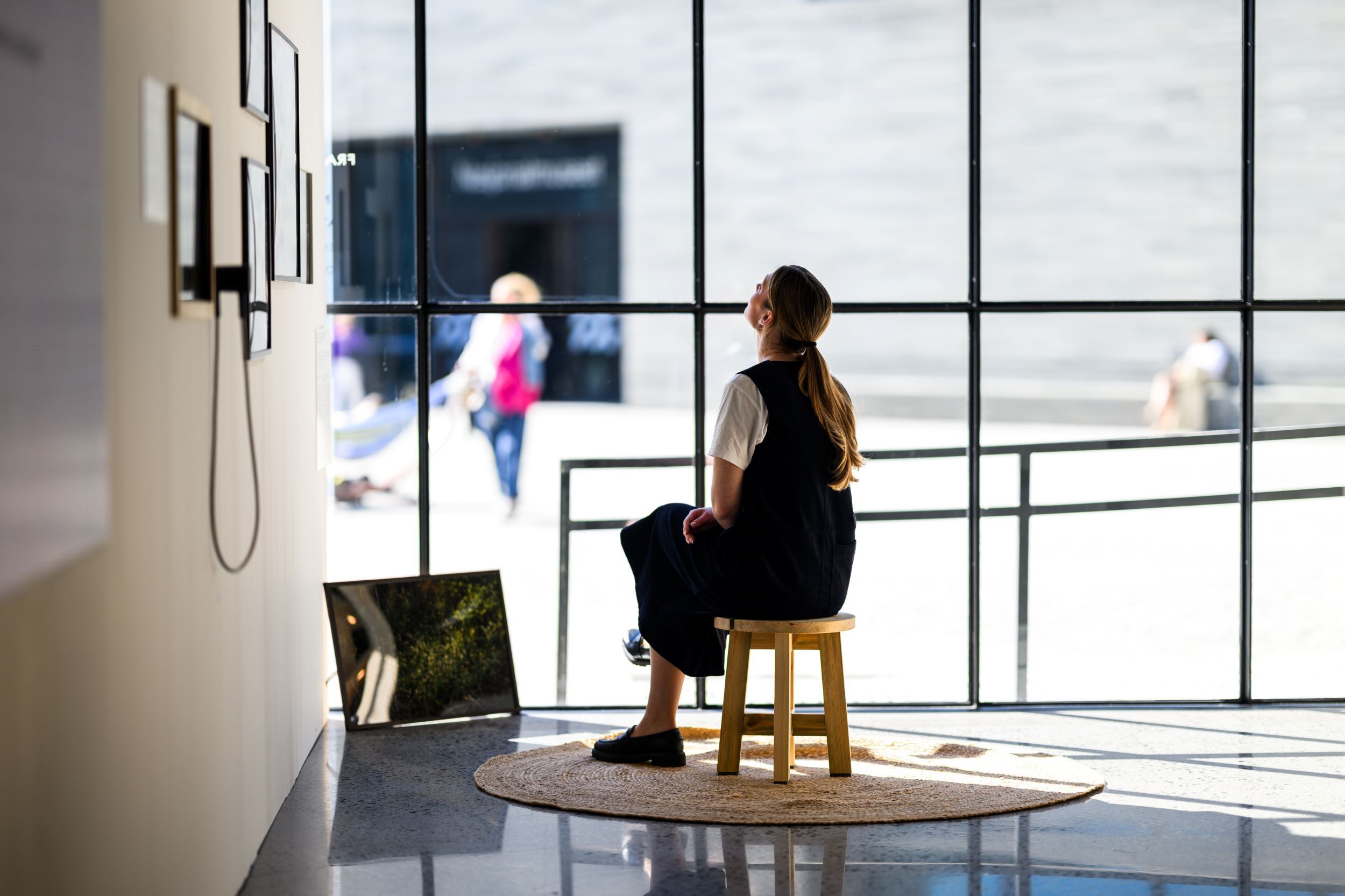
What is lost in war
In the art project Bloom with the wind blows (2024), Marisa Srijunpleang seeks to preserve the few fragments that remain of the past – both stories from her own family and memories from her grandparents’ generation. The work points to what is lost in war: culture, identity and belonging.
Srijunpleang grew up in a family from the border region between Thailand and Cambodia. During the Cambodian genocide in 1975, her family was forced to flee, and her grandfather died in a refugee camp. In the work, the artist searches for a flower that no one can reliably identify anymore – a metaphor for memories and knowledge that gradually disappear.
“For me, highlighting what is lost in war is not a distant historical exercise; it is an intimate search that begins with the land I grew up on and the complexities of my own identity as Thai-Cambodian.
I grew up surrounded by the hazy, fragmented echoes of that war. As a child, I was taught to pay respect to our ancestral portraits. My mother would introduce me to the faces in these photographs so I would remember them, but they were faces I could never truly know.
For me, the missing memories from losing loved ones to war are entirely empty, without answers, full of longing, and heartbreaking. I just hope that speaking about a simple, deeply personal feeling like losing someone will connect the audience to my work, because this hollow space in the heart can never truly be filled.
It is important to acknowledge this tragedy and sadness, so that it won't happen again.” — Marisa Srijunpleang
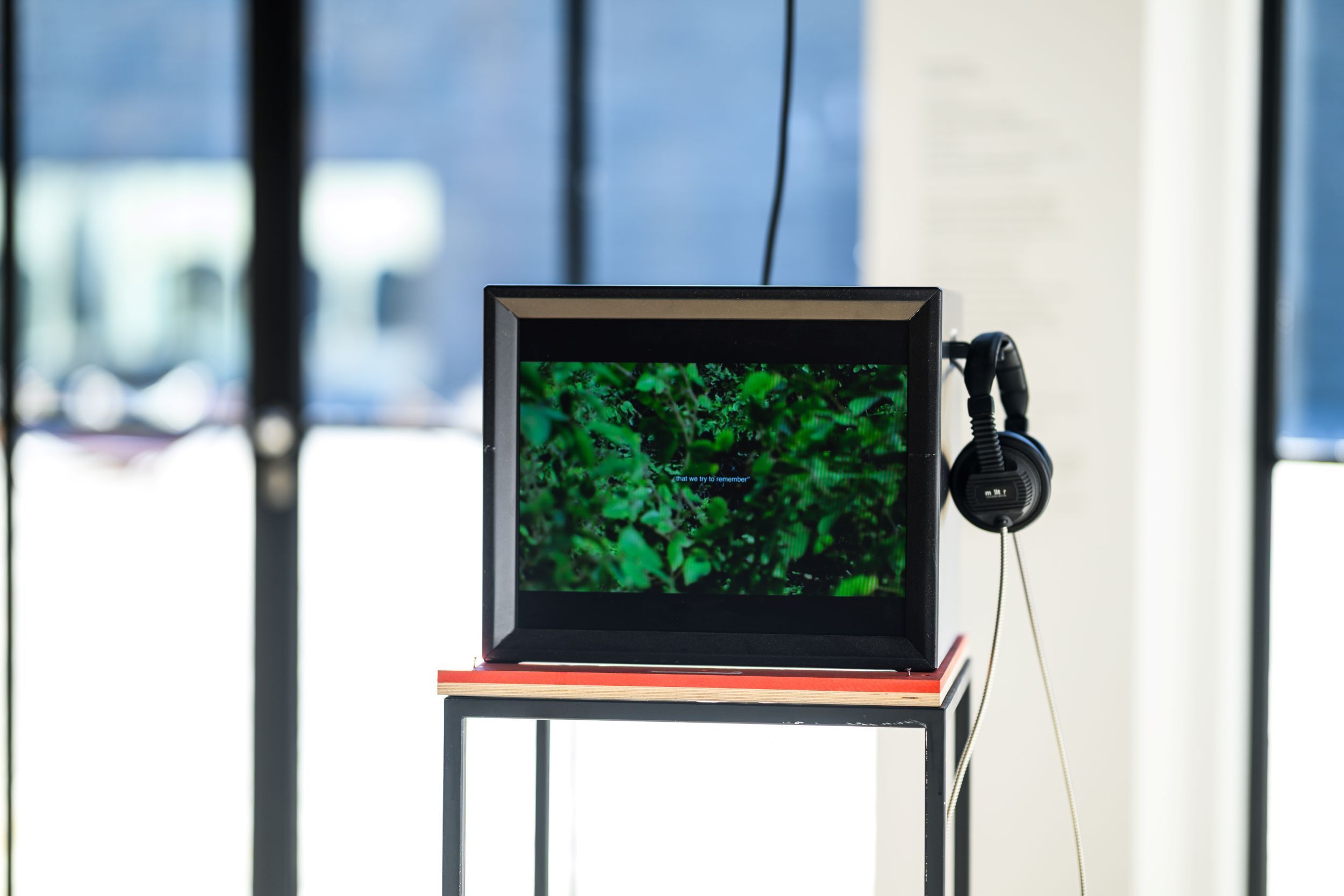
The significance of memory
When Russia launched its full-scale invasion of Ukraine in 2022, Katya Buchatska began imagining what a memorial to the war might look like once it is over. This resulted in the video work This world is recording (2022). In a 3D model, she plants trees in bomb craters and allows an imagined memorial to grow as a garden. Having experienced war herself, Buchatska questions whether monuments can truly function as warnings to future generations. Yet she continues to search for forms of remembrance that can foster lasting care – something that no one would wish to destroy.
“In Ukraine, we are witnessing both state-led attempts to create memorials for fallen soldiers and spontaneous grassroots practices of memorialization.
We are also witnessing a surge of artistic memorial practices: the situational flowerbeds of Dasha Chechushkova, Anna Nikitiuk and Ksenia Shcherbakova; Vitalii Kokhan’s textual interventions on buildings in a bombed district of Kharkiv; and many others.
All of these gestures are aimed at sustaining remembrance that is embedded in everyday life rather than relegated to a designated place one visits in order to “remember.”
These small acts of remembrance help those of us who are still alive remain close to the dead, close to loss. They create a kind of pocket-sized memory, carried close to the heart. They help us remember that we still exist.” — Katya Buchatska
Paths to Peace is the first exhibition in a five-year series exploring the meaning of peace at the Nobel Peace Center. It is on display until 31 March 2027. Learn more about the exhibition here.
Related
Share: